
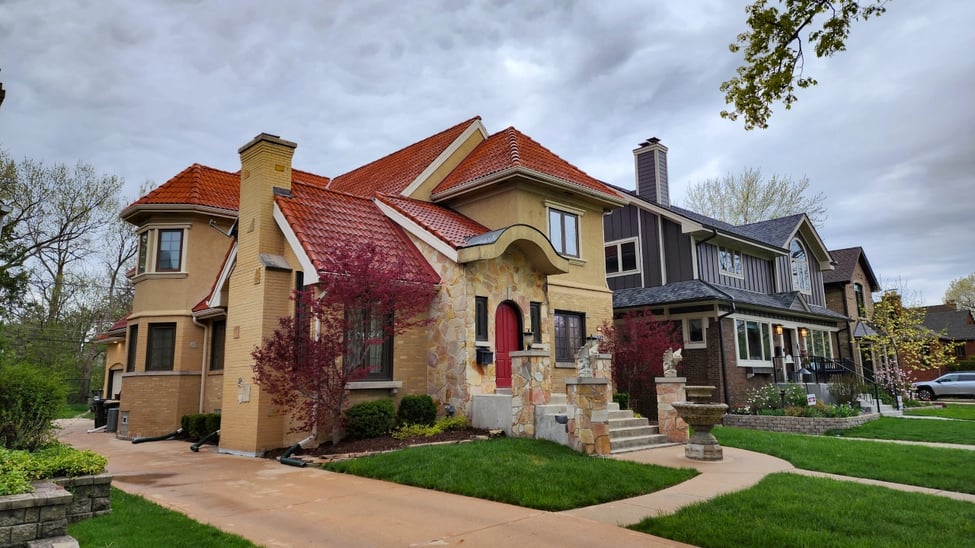
Look beyond the listing and consider the life around it.
What looks like the right home on a listing can feel entirely unique once you drive the route at 7:30 a.m., pick up groceries after work, or try to get across town on a busy afternoon.
That is one of the easiest things to overlook when searching Langley real estate.
Two homes can have similar layouts, similar square footage, and similar asking prices, yet their locations can create very different day-to-day routines. One may put you close to major routes, schools, shops, parks, and transit. Another may give you more space but add considerable travel time to your week.
There is another issue buyers sometimes miss: location is not only about what surrounds a property today. Langley City and the Township of Langley are both planning for changes in housing, transportation, and land use. Those plans can affect how an area looks and functions over time.
So, before focusing only on the house, ask a more important question: What will living at this address actually be like?
1. Your Daily Commute Starts With the Address
A home can look attractive on paper, but the route between that home and your regular destinations can shape your routine every day.
For many Langley buyers, location decisions involve:
- Fraser Highway
- Highway 1
- 200 Street
- 208 Street
- 64 Avenue
- 72 Avenue
- 88 Avenue
- Carvolth Transit Exchange
- Local bus routes
- Connections toward Surrey, Langley City, Abbotsford, and other parts of Metro Vancouver
The right location depends on where you actually need to go.
Someone commuting toward Surrey may have different priorities from someone working near Gloucester Industrial Park, Downtown Langley, or Abbotsford. A household with children may also care about school routes and after-school activities, while someone working from home may place more emphasis on nearby shopping, recreation, and walkability.
Transit is also becoming an increasingly relevant part of the local equation. The Surrey Langley SkyTrain project is planned to extend the Expo Line along Fraser Highway to 203 Street in Langley City Centre, with an anticipated in-service date of 2029.
The Township is also planning around future rapid transit along the 200 Street corridor, including the Langley-Haney Place Bus Rapid Transit project.
That does not mean every property near a proposed or future transit route will have the same market outcome. It means buyers should know what transportation changes are planned near a property before making a decision.
Try the commute before making an offer.
Visit the property at the times you normally travel.
Check:
- Morning traffic
- Afternoon traffic
- Transit availability
- Parking
- Highway access
- Walking routes
- School drop-off routes
- Travel time to work
- Travel time to frequently used services
A 10-minute difference each way can add up to hours over a month.
2. Neighbourhood Character Can Change What a Home Feels Like
Ever found a property that looks perfect online, only to arrive and realize the surrounding area is not what you expected?
This is why neighbourhood context matters in Langley real estate.
Langley is not one uniform residential market. The City of Langley and Township of Langley contain different communities, land-use patterns, housing forms, commercial areas, transportation networks, and development plans.
Consider a few examples.
Willoughby has undergone substantial planning activity, particularly around future transportation and land-use changes. The Township has updated its Willoughby planning framework in connection with the 200 Street transit corridor and future transit-oriented development.
Walnut Grove has its own community planning framework and sits near Highway 1, making transportation access an important consideration for many households.
Fort Langley has a distinct village setting and heritage context, so buyers may approach the area with different priorities from someone looking for a newer townhouse community.
Murrayville, Brookswood, and Aldergrove also have different housing and land-use characteristics.
The lesson is simple: Do not judge a Langley neighbourhood by a listing description alone.
Look at the surrounding streets, nearby properties, zoning, commercial areas, parks, transit, and municipal plans.
3. Future Development Can Change the Area Around Your Home
Here is where the numbers can become misleading.
A property might sit on a quiet street today. But what happens if nearby land is planned for additional housing, commercial space, transportation infrastructure, or another form of development?
That does not automatically make the change positive or negative. It depends on the property, the proposed project, the surrounding infrastructure, and what the buyer actually wants.
The Township of Langley uses an Official Community Plan and community and neighbourhood plans to establish policies around land use, transportation, housing, parks, and other areas of growth.
The City of Langley also has an Official Community Plan and zoning framework governing land use and development. Its new Zoning Bylaw was adopted in March 2026.
What should buyers investigate?
Before purchasing, look at:
- Current zoning
- Nearby development applications
- Community plans
- Proposed transportation projects
- Future land-use designations
- New housing projects
- Commercial development
- Road improvements
- Transit plans
- Park and public-space plans
This matters particularly when purchasing a property because you are not just buying the building.
You are buying a location within a changing municipality.
4. Property Type and Location Need to Work Together
A detached house, townhouse, condo, and acreage can all make sense in Langley, but the surrounding location can affect how each property works for the household.
For example, a condo near a transit corridor may suit someone who values access to transportation and nearby services.
A townhouse in Willoughby may appeal to a household looking for newer housing with access to community amenities and major roads.
A detached property in Brookswood or another lower-density area may provide a different setting, but transportation and proximity to daily services can become more important depending on the household.
An acreage in a more rural part of the Township creates another set of questions involving road access, utilities, lot characteristics, and distance from services.
The floor plan is just one aspect of the overall picture.
When comparing homes, ask: Does this property type make sense at this location?
For example:
- Is there enough parking for your household?
- Are schools within a practical distance?
- Is transit relevant to your routine?
- How long does it take to reach major roads?
- Are shops and services nearby?
- Does the lot provide the privacy you want?
- Could nearby development change the surroundings?
- Are there zoning considerations that matter to the property?
The answer can vary significantly from one part of Langley to another.
5. Location Can Affect How Much You Actually Spend
The purchase price is only one part of the equation.
A home farther from your regular destinations may have a different monthly cost structure than a property closer to work, transit, shopping, or schools.
Consider the costs associated with:
- Fuel
- Vehicle maintenance
- Parking
- Transit
- Child transportation
- Travel time
- Home maintenance
- Property taxes
- Strata fees
- Insurance
None of these should be viewed in isolation.
For example, paying less for a home but spending substantially more on transportation may change how the property fits your household budget.
The reverse can also happen. A property with a higher purchase price may reduce some transportation needs, but that does not automatically make it financially preferable.
The point is to calculate the full picture.
A simple location budget
Before making a decision, estimate your monthly transportation costs under each property you are considering.
Then compare:
Housing costs + transportation costs + regular location-related expenses
This analysis can reveal differences that do not appear on the MLS® listing.
6. Location Matters Even More When You Think About Resale
Nobody can guarantee what a property will sell for in the future.
However, buyers can still examine the characteristics of a location that may influence who might want the property later.
Think about the next buyer.
Would the property appeal to:
- Families?
- Commuters?
- Downsizers?
- First-time buyers?
- Investors?
- People seeking transit access?
- Buyers looking for a larger lot?
- People who want proximity to shopping or recreation?
This is not about predicting future prices.
It is about considering the range of households that could potentially find the property practical.
We must also consider the location in relation to future municipal planning. Langley City is planning around transit-oriented development and changes connected with the Surrey Langley SkyTrain, while the Township is working on transportation and community planning around areas such as Willoughby and the 200 Street corridor.
That makes local planning information worth reviewing alongside the property itself.
Common Langley Real Estate Location Mistakes
"The house is great, so the location must be fine."
Not necessarily.
A house can meet your needs while its surrounding location creates daily inconveniences. Check the neighbourhood at different times of the day before deciding.
"Close to a major road is always better."
Not always.
Major roads can provide convenient connections, but buyers should also consider traffic, noise, pedestrian access, and how the road affects the property's immediate surroundings.
"A future transit project guarantees higher property values."
There is no reliable way to make that guarantee.
Transit can change connectivity and land-use planning, but property values depend on many factors, including market conditions, property type, supply, demand, financing conditions, and the specific location.
"Every part of Langley works the same way."
It does not.
Langley City and the Township of Langley have separate municipal governments and planning frameworks. Neighbourhoods also differ in housing, roads, services, and future development plans.
How to Research a Langley Property Location
Before committing to a property, work through this sequence.
1. Map your regular destinations.
List your workplace, schools, family members, grocery stores, recreation facilities, and other places you visit frequently.
2. Test the commute.
Verify travel times during the hours you normally travel rather than relying solely on an off-peak map estimate.
3. Visit the neighbourhood twice.
Visit during the day and again during the evening. Listen for traffic, assess parking, observe pedestrian activity, and look at nearby properties.
4. Review municipal planning information.
Review applicable community plans, neighbourhood plans, zoning information, and development activities.
The Township publishes community and neighbourhood plans covering areas such as Willoughby, Walnut Grove, Brookswood-Fernridge, Aldergrove, Murrayville, Fort Langley, and Northwest Langley.
5. Look beyond the property boundary.
Check the surrounding blocks rather than focusing only on the house itself.
6. Compare several locations.
Instead of comparing only three houses, compare three locations.
That can reveal which trade-offs matter most to your household.
Frequently Asked Questions
Does location affect Langley real estate prices?
Yes, location is one factor that can influence property values, but it is not the only one. Property type, size, condition, lot characteristics, zoning, supply, market conditions, financing conditions, and nearby amenities can also matter. The impact of location can vary between neighbourhoods and property types.
Is Willoughby a good area for Langley real estate?
Willoughby has undergone significant community and transportation planning, including changes connected with the 200 Street corridor and future transit-oriented development. Buyers should look at the specific property, nearby infrastructure, current zoning, and applicable community plans rather than treating the whole area as one uniform market.
How important is transit when buying a home in Langley?
Transit can be important if you commute without a car or expect your transportation needs to change. Langley is also seeing major transit planning, including the Surrey Langley SkyTrain project and Bus Rapid Transit planning along the 200 Street corridor. Buyers should check the actual distance to current and planned transit infrastructure.
Should I check future development before buying a Langley home?
Yes. Reviewing future development can help you identify planned changes to nearby housing, roads, commercial areas, parks, and transportation. Municipal community plans and development information can provide context that may not appear in a property listing. The Township publishes community and neighbourhood planning information online.
Is Langley City the same as the Township of Langley?
No. Langley City and the Township of Langley are separate municipalities. They have different municipal governments, planning documents, neighbourhoods, and land-use policies. A buyer should confirm which municipality a property is located in before researching zoning, taxes, planning information, and municipal services.
Does being close to Highway 1 matter when buying in Langley?
It can, particularly for people who regularly commute along the highway. But proximity should be considered alongside traffic patterns, road access, noise, and the time required to reach the highway from the property. The most useful comparison is the actual route and travel time from the specific home.
What should I check when comparing Langley neighbourhoods?
Start with your daily routine. Compare commute times, transit, schools, shopping, recreation, roads, housing types, zoning, development plans, and nearby amenities. Then visit each area at different times of day. A neighbourhood that looks similar on a map can function quite differently once you spend time there.
Looking at Langley Real Estate?
The address on a listing is only the starting point.
If you are buying, selling, relocating, or researching property in Langley, NexKey Real Estate Group can help you examine the property alongside the surrounding neighbourhood, transportation connections, housing types, and relevant local planning information.
Visit NexKey Real Estate Group at nexkeybc.com or call at 604-468-0010 to discuss your Langley real estate plans.